Starting with cutting hair extensions offers endless chances to change and improve your hair. Whether you want to add volume, length, or just update your style, learning how to cut hair extensions can make a big difference. This guide provides easy-to-follow steps, helpful tips, and expert advice to help you get great results every time. Get ready to discover how to create perfectly customized extensions and let your creativity shine in hairstyling!
Main Contents
Why Do We Need To Cut Hair Extensions?
Have you ever wondered why cutting hair extensions is so important in hair care? It might seem odd at first—extensions are designed to add length and volume, so why trim them? Let’s dive into why cutting hair extensions is essential.
For Customization
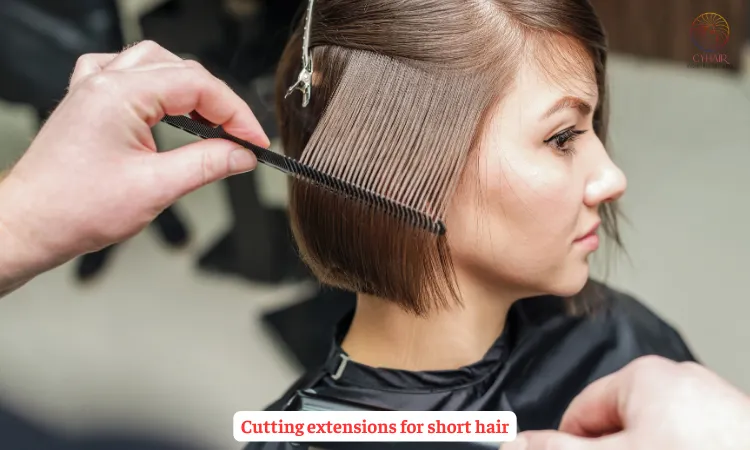
Hair extensions usually come in standardized lengths, but not everyone’s natural hair or desired style matches those lengths perfectly. Not only that but sometimes they can be too thick or bulky, especially if the wearer has fine or thin natural hair. So, cutting the extensions or thinning out the extensions can be customization to match the length, reduce bulkiness, and create a more natural appearance.
For Blending
Cutting extensions helps blend them smoothly with your natural hair. If the extensions are much longer or thicker than your natural hair, trimming them creates a smoother transition and avoids visible lines. Cutting also allows for customization to achieve the desired style and length. By carefully trimming the extensions, hairstylists can ensure they blend well with your natural hair, enhancing volume and creating a unified look. Additionally, proper cutting techniques can address any texture differences between the natural hair and extensions for a flawless finish.
For Layering
If you want a layered hairstyle, cutting extensions to different lengths can help achieve this look. Layering adds depth and movement to the hair, giving it a more dynamic and textured appearance. By cutting extensions at various lengths, you can create everything from subtle, face-framing layers to bold, voluminous ones. This approach opens up countless possibilities for adding dimension and movement to your hairstyle.
Removing Damage
Although extensions are durable, they can still get damaged from styling, heat, and environmental factors. Trimming helps remove split ends and damage, keeping them looking healthy and fresh. Regular trims are key to maintaining the health and longevity of your hair extensions.
How To Cut Hair Extensions?
Cutting hair extensions is crucial for creating a customized, natural-looking style that blends well with your natural hair and desired appearance. Whether you want a sleek, polished look or a trendy, layered style, knowing how to cut extensions can enhance your overall look. Although cutting extensions may seem challenging, with the right tools, techniques, and some practice, you can master it and tailor your extensions to fit your unique style.
How To Cut Hair Extensions #1. Prepare Hair & Essential Tools
Before you begin trimming your hair extensions, ensure they are properly installed. Attach them to achieve your desired look, and part your hair as needed. Cutting the extensions while they are dry helps you see their color, texture, and shape more clearly, allowing for precise measurement of length and density. This clarity helps you choose the best style. Also, make sure your hair styling kit is fully stocked for the best results. Here’s what you’ll need:
- Sharp Scissors or Shears – For precise cutting.
- Fine-Tooth Comb – To detangle and section the extensions.
- Clip or Hair Ties – To hold sections of hair in place.
- Mirror – For clear visibility and accurate cutting.
- Extension Brush – To smooth and detangle the extensions.
- Measuring Tape – To ensure even length and consistency.
- Heat Protectant Spray (if you plan to use heat tools) – To protect the extensions from heat damage.
- Sectioning Clips – To manage and separate different sections of hair while cutting.
With these tools, you’ll be well-equipped to achieve a customized, professional look for your extensions.
How To Cut Hair Extensions #2: Mastering the Techniques
Different hair extensions need specific cutting techniques based on the look you want to achieve. The primary goal is to create a seamless blend with your natural hair. To do this, it’s important to use the right cutting methods. Here are some effective techniques for blending hair extensions:
Slicing
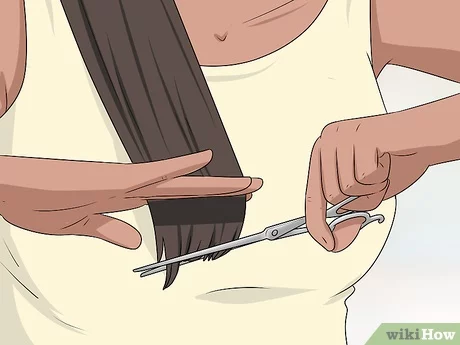
Slicing cutting is a technique used to blend hair extensions seamlessly with natural hair for a cohesive and natural look. This method involves gliding the open blades of the scissors through sections of both extensions and natural hair in a slicing motion. This technique helps remove excess weight and adds texture, ensuring a smooth transition between the extensions and your natural hair.
Treat the natural length of your hair as the shortest layer. Hold a section of the extensions with your fingers, and then cut from the center to the ends in a diagonal motion. Use a gentle, closing-and-opening motion with the shears rather than drawing them straight through the hair.
Point Cutting
Point cutting is a technique used to add texture and reduce bulk at the ends of the hair. Point cutting involves using the tips of the scissors to snip the hair at an angle, which creates a softer, more natural finish. This method is great for blending layers and achieving smooth transitions between different lengths. To use this technique, hold the extensions by the ends and cut upwards into the hair. Make sure to cut straight up along the hair to remove bulk without shortening the length.
Slithering
Slithering is an effective technique for removing bulk and creating subtle layers in hair extensions. Similar to slicing, slithering uses a sliding motion with the scissors to achieve a feathered look. To perform this technique, hold the scissors vertically in the middle of a section and slide them downward with the blades slightly open. While slicing is great for the front layers, slithering is ideal for creating a tapered, blended effect throughout the entire length of the hair.
Blunt Cutting
Blunt cutting is a technique used to create a clean, uniform edge on hair extensions. It’s ideal for achieving sleek, structured styles and helps the extensions blend seamlessly with natural hair. To perform a blunt cut, trim the hair at a 0-degree angle, ensuring that each section aligns and all strands fall to the same length for an even finish. For the best results, we strongly recommend consulting a professional hair stylist.
However, if you can’t access a stylist, you can cut your own hair extensions using the techniques mentioned above. Just make sure you have the right tools to achieve the best possible outcome.
Conclusion
In conclusion, cutting hair extensions might seem intimidating at first, but with the right tools, techniques, and guidance, it can be straightforward and satisfying. By following the steps in this guide, you can achieve your desired length, style, and a seamless blend with your natural hair. Take your time, be patient, and practice on small sections before making any significant cuts to ensure the best results.